
An Age-By-Age Guide to Sensory Toys
Updated: 3/18/2025
As parents, we’re constantly searching for ways to support our children’s development while keeping them engaged and happy. Enter sensory play – a powerful approach to childhood learning that goes beyond simple entertainment to build crucial developmental foundations.
Expert-Recommended Activities for Development Through Play
Sensory toys and activities are designed to stimulate children’s senses: touch, sight, hearing, smell, taste, and also movement and body awareness. For both neurotypical children and those with sensory processing differences, these experiences create the building blocks for cognitive, emotional, and physical development.
What Is Sensory Play and Why Is It Important?
Sensory play encompasses any activity that engages one or more of a child’s senses. From squishing play dough between their fingers to balancing on stepping stones, these experiences help children understand and navigate their world.
“Play is the natural language through which a child communicates and processes their thoughts and emotions,” explains child development specialist Dr. Emily Martin. “Sensory play creates neural connections that support cognitive growth, language development, fine and gross motor skills, problem-solving, and social interaction.”
The benefits of sensory play include:
- Cognitive development: Sensory experiences build “sensory memories” that children draw upon when encountering new situations
- Emotional regulation: Engaging the senses has a calming effect, helping children learn to self-soothe and manage emotions
- Fine motor skills: Manipulating different materials strengthens hand muscles and coordination
- Language development: New sensory experiences naturally encourage vocabulary building as children describe what they’re experiencing
- Social skills: Shared sensory activities promote cooperation, turn-taking, and communication with peers
Let’s explore the most beneficial sensory play activities for each age group.
Sensory Play for Babies (0-12 months)
The first year of life is filled with sensory discoveries as babies use their senses to understand their new world. Their brains are forming over a million new neural connections every second, making this an ideal time for gentle sensory experiences.
0-3 Months: First Sensory Discoveries
During these early months, babies benefit from simple, focused sensory experiences:
- High-contrast black and white cards for visual stimulation
- Soft textured toys for tactile exploration
- Gentle rattles for auditory stimulation
- Tummy time mats with different textures
- Singing and talking to develop auditory processing
“Young babies are particularly responsive to faces, voices, and high-contrast visuals,” notes pediatric specialist Dr. Sarah Chen. “Simple sensory experiences during this period establish foundations for visual tracking, reaching, and early social bonding.”
4-6 Months: Reaching and Grasping
As babies gain more control over their movements, they’re ready for more interactive sensory play:
- Crinkle toys and books that make noise when touched
- Soft balls with different textures to encourage reaching and grasping
- Baby-safe mirrors for visual exploration
- Teething toys with varied textures for oral sensory input
- Simple musical toys that respond to baby’s touch
7-12 Months: Exploration and Cause-Effect
Mobile babies are eager explorers ready for more complex sensory experiences:
- Sensory balls with bumps, ridges, or crinkle material
- Stacking cups or rings in different colors and textures
- Musical instruments like drums or shakers
- Water play during bath time with cups and squeeze toys
- Touch-and-feel books with different textures
- Soft blocks with various textures and colors
“At this age, babies love discovering cause and effect,” explains early childhood educator Maria Garcia. “When they shake a rattle and hear a sound, or press a button and see a light, they’re learning they can impact their world – a crucial cognitive development.”
Sensory Play for Toddlers (1-3 years)
Toddlers are active explorers whose growing independence makes them perfect candidates for more involved sensory experiences.
1-2 Years: Tactile Exploration
Toddlers at this age are particularly drawn to tactile experiences:
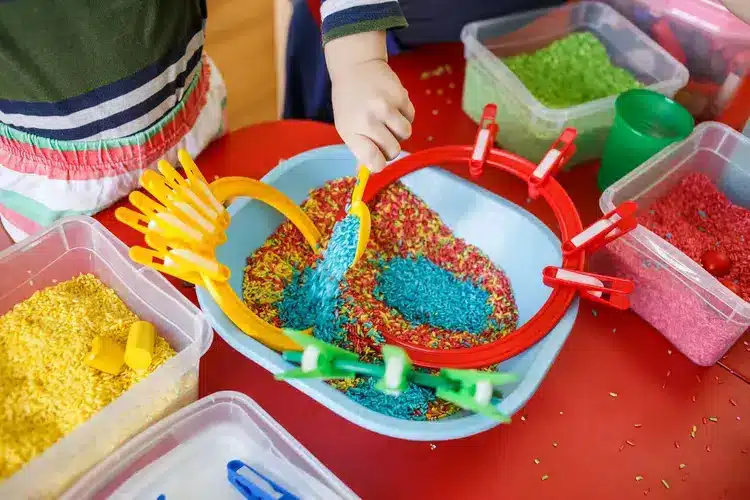
- Sensory bins with rice, beans, or pasta (always supervised)
- Play dough or modeling clay for squeezing and molding
- Finger painting for messy, colorful exploration
- Water tables with cups, funnels, and scoops
- Textured puzzles with knobs for easy grasping
- Musical toys that respond to pushing, pulling, or spinning
“Toddlers learn primarily through their hands,” notes occupational therapist James Wilson. “The more varied the tactile experiences you provide, the more neural connections they form for future learning and fine motor development.”
2-3 Years: Multi-Sensory Play
Older toddlers can engage in more sophisticated sensory activities:
- Kinetic sand for molding and shaping
- Nature sensory bins with leaves, pine cones, and rocks
- Sorting activities with objects of different sizes, colors, and textures
- Scented play dough to incorporate smell into tactile play
- Balance stepping stones for vestibular (balance) development
- Simple obstacle courses combining multiple sensory experiences
- Light tables with translucent objects for visual exploration
Sensory Play for Preschoolers (3-5 years)
Preschoolers can engage in more complex sensory activities that incorporate early academic concepts and social play.
3-4 Years: Creative Sensory Exploration
Preschoolers at this age benefit from sensory activities that encourage creativity and problem-solving:
- Sensory art projects using textured materials, scented markers, or natural items
- Simple science experiments with water, color mixing, or magnets
- Texture scavenger hunts indoors or outdoors
- Sensory-rich dramatic play with costumes of different textures
- Movement games that incorporate balance, jumping, and coordination
- Sound matching games for auditory discrimination
- Pattern activities with textured materials
“Preschoolers are making connections between sensory experiences and abstract concepts,” explains early childhood educator Dr. Lisa Taylor. “When they sort rough and smooth objects or identify patterns in nature, they’re building foundations for mathematical thinking and scientific observation.”
4-5 Years: Cognitive Connections
Older preschoolers can engage in sensory play that supports pre-academic skills:
- Letter and number sensory trays (writing in sand, salt, or shaving cream)
- Sensory-based board games that involve texture matching or sound identification
- DIY musical instruments from recyclable materials
- Cooking and baking activities that engage all senses
- Nature journals that incorporate collected sensory items
- Obstacle courses that include following multi-step directions
- Sensory storytelling with props of different textures
Sensory Play for School-Age Children (6+ years)
Older children continue to benefit from sensory experiences that support focus, creativity, and emotional regulation.
6-8 Years: Focus and Self-Regulation
School-age children can use sensory activities to support learning and emotional regulation:
- Fidget toys that support focus during seated activities
- Sensory bottles for calming visual stimulation
- DIY slime or putty for tactile stress relief
- Balance boards or wobble cushions for vestibular input
- STEM-focused sensory kits that combine science concepts with hands-on exploration
- Sensory-rich art projects like textured collages or 3D sculptures
9+ Years: Creative Expression and Stress Management
Older children benefit from sensory activities that help manage the increasing academic and social pressures:
- Advanced crafting kits with varied textures and materials
- Sensory-rich outdoor activities like gardening or nature exploration
- Stress-relief gadgets designed for older children
- Cooking projects with complex sensory experiences
- DIY spa activities with scents and textures for relaxation
- Mindfulness activities that incorporate sensory awareness
Creating Sensory Play at Home: Simple Ideas for Every Age
You don’t need expensive toys to create valuable sensory experiences. Here are easy, affordable sensory play ideas you can implement today:
For Babies:
- Fill a clean sock with bells for a simple rattle
- Create texture boards from fabric scraps glued to cardboard
- Make sensory bottles by filling empty, sealed water bottles with colorful items
For Toddlers:
- Create a homemade playdough (flour, salt, cream of tartar, oil, and water)
- Make a sensory bin with dry pasta, measuring cups, and spoons
- Fill a shallow bin with water and provide cups, funnels, and sponges
For Preschoolers:
- Create “mystery bags” with objects to identify by touch
- Make texture rubbings with crayons and paper over different surfaces
- Create an obstacle course with cushions, tunnels, and stepping stones
For School-Age Children:
- Make DIY stress balls from balloons filled with flour or cornstarch
- Create scented play dough with essential oils or extracts
- Design texture collages from nature items, fabrics, and recyclables
Sensory Play for Children with Special Needs
While all children benefit from sensory play, it can be particularly valuable for children with sensory processing differences, autism spectrum disorder, ADHD, or developmental delays.
“The key is understanding your child’s unique sensory profile,” explains occupational therapist Rachel Thompson. “Some children seek sensory input—they need more intense stimulation to feel regulated. Others avoid certain sensory experiences because they’re overwhelming.”
Helpful sensory tools for children with special needs might include:
- Weighted blankets or lap pads for calming proprioceptive input
- Noise-canceling headphones for children sensitive to sounds
- Vibrating toys for strong tactile feedback
- Swings for vestibular regulation
- Chewable jewelry for oral sensory seekers
- Visual timers for transitions between activities
Safety Considerations for Sensory Play
Always keep these safety guidelines in mind:
- Supervision is essential: Never leave young children unattended during sensory play
- Age-appropriate materials: Avoid choking hazards for children under 3
- Non-toxic materials: Ensure all sensory materials are safe if mouthed
- Allergies: Be aware of any food allergies when using edible sensory materials
- Watch for overstimulation: Be ready to take breaks if your child shows signs of being overwhelmed
FAQs About Sensory Play
What’s the difference between a toy and a sensory toy?
Sensory toys are specifically designed to stimulate one or more senses. While many traditional toys provide sensory input, sensory toys intentionally focus on specific types of sensory experiences to support development or meet sensory needs.
How do I know if my child needs more sensory stimulation?
Children seeking additional sensory input might: fidget frequently, chew on items, seek movement, touch everything around them, or make repetitive noises. If you notice your child consistently seeking certain sensory experiences, providing appropriate sensory toys can help meet these needs.
Can too much sensory stimulation be harmful?
Yes, overstimulation can cause stress responses in children. Signs include irritability, meltdowns, withdrawal, or shutting down. Rotate sensory toys rather than making everything available at once, and observe your child for signs they need a break.
What are the best sensory toys for calming an anxious child?
Calming sensory toys often include: weighted stuffed animals, soft textured blankets, slow-moving visual toys like lava lamps, gentle-sounding white noise machines, or scented items with lavender or vanilla (for older children).
How do I incorporate sensory play into busy days?
Many daily routines naturally incorporate sensory experiences: bath time for water play, meal preparation for smells and textures, and bedtime routines with soft blankets and gentle music. Even a quick five-minute sensory activity can provide valuable developmental benefits.
Conclusion: The Lasting Value of Sensory Play
Sensory play offers far more than simple entertainment—it provides essential experiences that support development across domains. From the earliest explorations of infancy through the more complex play of older childhood, sensory activities build neural connections, support self-regulation, and create joy in learning.
By understanding the developmental benefits of different types of sensory experiences and matching toys to your child’s age, interests, and individual needs, you can create opportunities for growth that engage your child’s natural curiosity and love of discovery.
Remember that the most valuable aspect of sensory play often isn’t the toy itself but the experiences and interactions it facilitates. Whether you’re investing in specialized sensory equipment or creating simple sensory opportunities with household items, your engagement and support turn these experiences into powerful building blocks for your child’s development.